Organizations depend on emails for work-related communication; without emails, official communication will be in jeopardy.
You may get hundreds of emails daily, but you do not open them all. You open only those emails from known individuals within and outside the organization, as you understand the looming risks and always treat emails from unknown senders with caution. This attitude safeguards your email and your organization from cyberthreats.
However, what if you open an email from someone within the organization, only to find it is from an imposter? What if the imposter earns your trust by mimicking the tone, the signature, even the writing style of the person they are impersonating?
Business Email Compromise (BEC) is one of the most deceptive cyberattacks, capable of causing severe damage to your organization. It is intelligent, personalized, and dangerously convincing.
This article explains what business email compromise is, the psychology behind it, various types of BEC attacks, and how it works. It also outlines a few preventive measures against BEC and lists the things to follow when a BEC occurs.
What is Business Email Compromise?
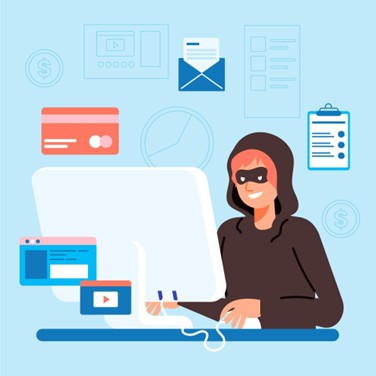
Business Email Compromise (BEC) is a type of cyberattack that involves attackers impersonating trusted individuals or organizations, deceiving them into sending money, sharing confidential information, granting system access, or enabling privileged access .
Trusted individuals may include managers, executives, colleagues, or anyone within the organization who interacts through email for day-to-day work. Trusted organizations may consist of partner organizations, third-party vendors, or clients.
How Does BEC Differ From The Most Common Cyberattacks Targeting Email?
The most common cyber attacks that target email are phishing attacks. Attackers send phishing emails in massive numbers, following a predictable pattern. So, automated security systems can detect them relatively easily and flag them as they cast a wide net.
Unlike phishing and other common email threats, BEC is a precisely targeted attack. It impersonates you, targets key employees, gains access through them, and compromises your organization’s security from within.
It is hard to impersonate you without knowing your habits and behavior, and writing style. So, to make impersonation more convincing, attackers often research their victims. They study company hierarchies to understand whom you write to regularly, the different tones you usually adopt when writing to your peers and superiors, the reporting structure, timing, and frequency, and more.
Based on this understanding, they write messages that blend seamlessly into routine work communication. It is convincing enough for the individual they target to reply or respond to the demands placed in the email. Responding to those requests will compromise the security of the organization and its sensitive data. A single convincing message can cause a massive financial loss or data breach.
According to the FBI, business email compromise scams have caused $55.5 billion in losses over the past decade. And when these attacks succeed, it is not because attackers can actively put efforts into breaking through the cyberdefenses of your organization, but because they manage to manipulate human psychology.
The Psychology Behind BEC: How Impersonation Works
Business email compromise works by targeting the one thing that keeps organizations working fluidly: trust! Since you trust your peers, superiors, vendors, partners, and affiliates, attackers impersonate them and practice social engineering, manipulating you and exploiting your trust, authority, and urgency. These are among the common psychological triggers that can lower your natural defenses during routine communication.
For istance, if your superior sends you an email, instructing you to send a sensitive financial report within the next five minutes, you cannot deny or delay. It is because of their position, your responsibility to deliver, and the urgency of their requests that you need to act immediately. So, you are more likely to overlook the red flags in it.
Attackers can accurately impersonate those people because they prepare in advance by studying their targets through public data such as LinkedIn, company websites, or social media. By learning their habits and behaviour, as well as observing their writing styles, common greetings, and typical workflows, attackers can impersonate them accurately.
Nevertheless, it is impossible to deceive you when the mail from the impersonator comes from some unknown/unfamiliar email address or domain. So, attackers indulge in email spoofing or use domain lookalikes, creating fake email addresses that resemble legitimate ones. For instance, they will use ceo@intriggue.com to impersonate your CEO if your CEO’s real official email address is ceo@intrigue.com. Now that the email address looks familiar, you may overlook the tiny spelling differences in the domain name.
One last defence in your arsenal is your email’s spam filter. However, since these emails often contain no links or attachments, traditional spam filters rarely detect them. So, the email would have reached your inbox without any hurdles.
By the time you realize something is wrong, you may have already read and responded to the mail. You might have already transferred funds that the impersonator requested to send to an account, or you might have sent them sensitive data
- Attackers learn the habits, behaviors, writing, styles, and tone of your colleagues or partners they want to impersonate.
- They create a fake email address with a domain lookalike and indulge in email spoofing to appear legitimate.
- They contact you using that fake email address, impersonating a trusted individual.
- They practice social engineering, exploiting your trust, authority, and urgency.
- They request a fund transfer or ask you to send sensitive data.
- Since you trust the person and the email address to be legitimate, you follow the instructions and give them what they ask for.
Common Types of BEC Attacks
There are many types of Business Email Compromise. Each of those types exploits a different aspect of workplace trust.
- CEO Fraud: Attackers impersonate top management executives, such as the CEO of the organization, to request urgent payments or confidential reports.
- Invoice Fraud: Criminals impersonate third-party vendors, sending fake invoices and payment instructions. They also send altered account details, convincing you to transfer the payment to that account.
- Account Takeover: Attackers hack into a real employee’s email account and send malicious requests from it.
- Attorney Impersonation: Fraudsters mimic lawyers or legal representatives to pressure victims into making quick decisions.
- Gift Card or Payroll Diversion Scams: Attackers target HR or finance departments, making requests for payroll changes or bulk gift card purchases.
How Attackers Bypass Traditional Email Security
With the increase in the sophistication of cyber attacks, cybersecurity tools have also become powerful. However, business email compromise attacks slip through these defenses because cybersecurity tools are designed to detect active attacks. BECs solely rely on human error and weak email authentication.
Email verification relies on three authentication standards: SPF, DKIM, and DMARC. These three standards play a crucial role in verifying whether an email originated from its claimed domain. But when SPF, DKIM, and DMARC records are misconfigured or entirely go missing, email spoofing succeeds in bypassing them. When these standards do not work as intended, anyone can send emails that appear to come from your organization.
Besides, the attacker has to hack into a legitimate account and compromise it only once. Once they gain access, they are already inside the system, meaning they no longer need to use a fake domain. They can carry out malicious activities using a valid email account within your company domain, making emails from that account virtually indistinguishable from genuine messages.
So, How Can You Prevent Business Email Compromise?
You can prevent business email compromise by making people aware, implementing cybersecurity measures, and establishing processes.
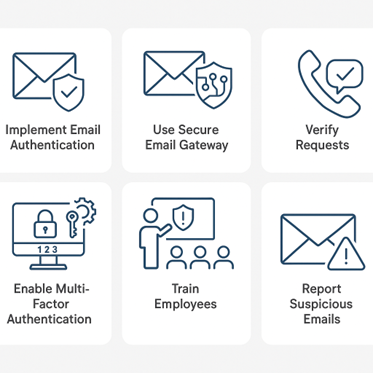
- Implementing email authentication helps prevent email spoofing. You must use SPF, DKIM, and DMARC protocols for that and ensure they are always appropriately configured.
- Deploying advanced secure email gateways helps prevent BEC emails from reaching the inbox. They detect email spoofing and impersonation attempts using AI and Machine Learning.
- Independently verifying requests through channels other than email, such as phone calls, video chats, or internal messaging platforms, allows you to verify financial or data-related requests every time.
- Enabling Multi-Factor Authentication (MFA) safeguards you against account takeovers by adding an extra security layer for verification.
- Regularly training employees and creating cybersecurity awareness empowers them to recognize BEC email patterns, including subtle tone variations, urgency cues, or slight domain variations.
- Establishing clear channels for reporting suspicious emails will enable staff to confidently report suspicious emails immediately when they spot them, without fear of blame. Early reporting can stop a BEC attempt from turning into a full-fledged breach.
What Should You Do if You Suspect a BEC Attack?
If you suspect an email is a BEC attempt, acting quickly is critical to significantly reducing the damage. The chances of containment and recovery increase the sooner you report.
- Do not respond to or reply to the email, and do not forward it to anyone.
- Inform your IT and cybersecurity teams immediately.
- Keep the email as it arrived, with the headers, for forensic analysis.
- If you have responded to a fund transfer request, inform your bank and law enforcement immediately. You can follow up with agencies like CERT-In or local cybercrime portals to help trace the funds.
- Reset the email passwords and enable Multi-Factor Authentication (MFA) across affected accounts.
Final Thoughts
Business email compromise is one of the most effective and dangerous threats to email security . It is mainly because it does not actively break through your cybersecurity systems with malicious attachments or obvious red flags; instead, it comes disguised as a familiar message from an impersonator masquerading as a trusted person.
It earns your trust and convinces you to weaken your defenses and take actions that can compromise your systems and data. The most effective defenses against these types of threats are awareness, verification, stringent email security measures, and consistent cybersecurity hygiene.
It is critical to treat every email with caution and suspicion, even if it sounds “just like” your colleague, and verify if it is really from that person. Ultimately, protecting business email requires a combination of awareness and technology.
Every employee, from the CEO to the intern, must be made aware of the dangers of Business Email Compromise. At the same time, you should also adopt cybersecurity tools that incorporate the latest technologies to keep the organization secure.
FAQs
1. What is impersonation in email security?
Impersonation is when attackers pose as trusted individuals or organizations through deceptive emails to trick recipients into sharing information, transferring money, or revealing credentials.
2. What is meant by business email compromise?
Business Email Compromise (BEC) is a cybercrime where attackers impersonate legitimate contacts or hijack business emails to steal money, data, or access using social engineering tactics.
3. What to do if someone is impersonating your business online?
Report the impersonation to your email provider, customers, and law enforcement immediately. Secure your domain, strengthen authentication, and alert stakeholders to prevent financial or reputational loss.
4. How do you investigate a business email compromise?
Investigate by preserving email headers, analyzing login logs, tracing IP addresses, and checking mail server authentication. Involve cybersecurity experts and law enforcement to identify breaches and prevent recurrence.
Here’s How You Can Engage with Us:
- Stay Connected: Follow our latest updates, insights, and events on LinkedIn.
- Collaborate with Us: Partner with us to enhance your IT infrastructure or cybersecurity systems.
Let’s work together to drive success and secure your enterprise.
Contact Us | Explore Our Services